
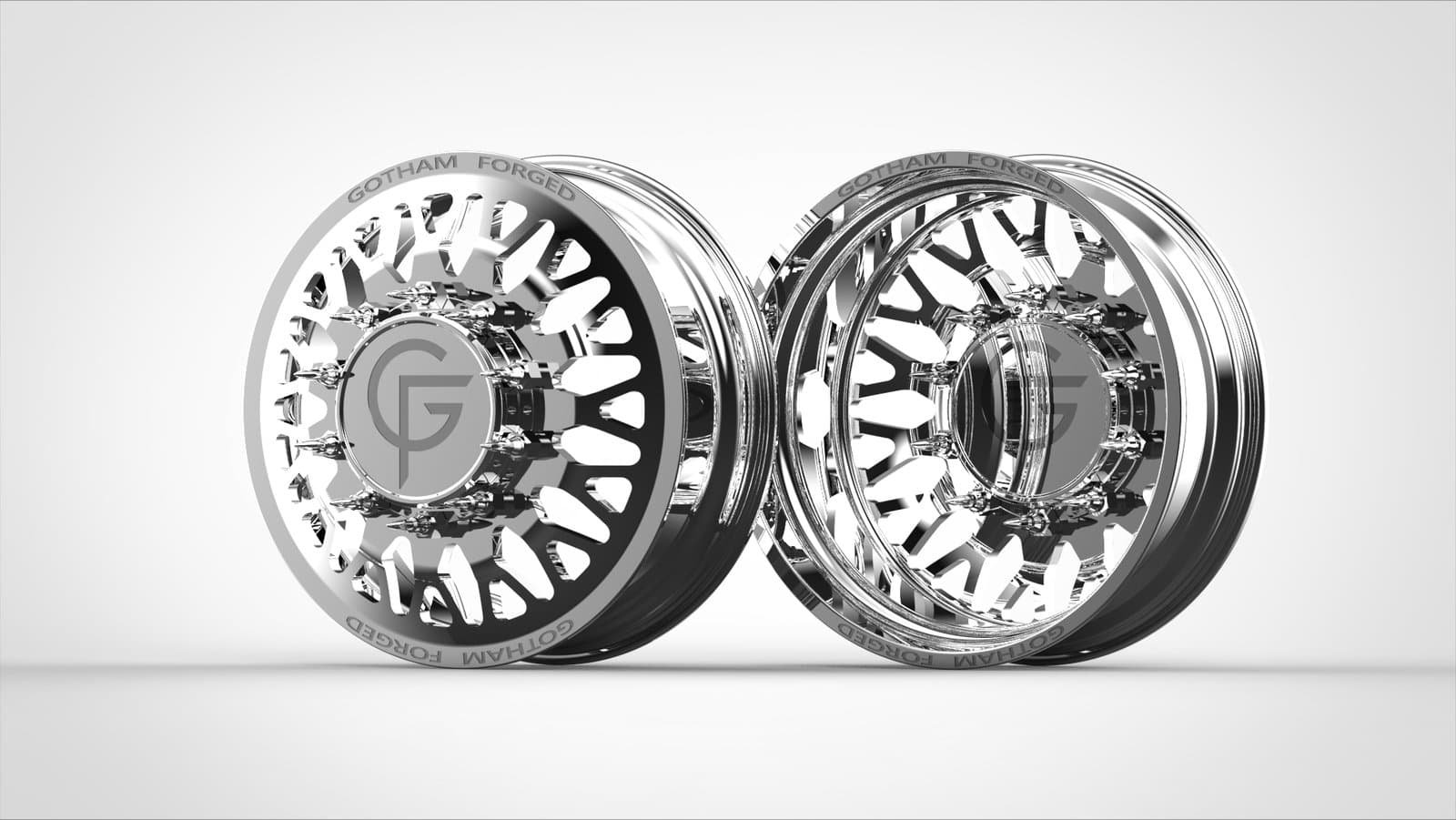
The Physics of Towing Stability
Every dually owner knows the feeling: crosswind on the highway, loaded trailer behind you, and the truck wants to wander. The trailer pushes. The wind pushes. And the truck's ability to resist those forces comes down to one thing — track width.
Track width is the distance between the center of the left tire and the center of the right tire. Wider track = wider base = more resistance to lateral forces. It's the same reason a wide-stance fighter is harder to push over than someone standing with their feet together.
How Wheel Offset Creates Track Width
On a dually, the rear wheels are already doubled up — inner and outer. The offset of the outer wheel (how far the mounting face is from the wheel centerline) determines how far that wheel sits from the truck's frame.
A more aggressive offset — pushing the wheel further outboard — increases track width. But offset isn't something you can just guess at. Too much and you're outside the fender, stressing axle bearings with increased lever arm forces. Too little and you're not getting the stability benefit.
The Precision Fitment Advantage
This is where custom-engineered fitment makes the difference. When we build a set for your truck, we engineer the exact offset based on your vehicle's suspension geometry, tire size, and intended use. Towing 30,000 lbs on the highway needs a different setup than running empty on lease roads.
The fitment hardware is machined to a specific thickness that sets the wheel at the optimal offset for your application. Not a one-size-fits-all spacer — a calculated dimension based on your truck.
The result:
- Wider stance — more lateral stability under towing loads and crosswinds
- Better weight distribution — the load spreads across a wider base, reducing the tipping moment
- More commanding presence — the truck looks planted and purposeful, not narrow and top-heavy
- Improved cornering confidence — wider track reduces body roll tendencies under load
The Rotating Assembly Benefit
Pushing the wheel outboard with precision fitment hardware also changes the geometry of the rotating assembly. The larger hub face of the semi bolt pattern, combined with the hub-centric load-bearing interface, creates a wider, more stable mounting platform for the wheel.
This isn't just about looks. A wider mounting platform distributes bearing loads more evenly, reduces stress concentrations on seals and races, and improves the longevity of the entire rotating assembly — hub, bearings, seals, and wheel.
Engineered, Not Guessed
The key word is engineered. Every dually truck has different axle geometry, different spring rates, different tire sizes, different towing loads. A 2024 F-450 Platinum towing a 35-foot fifth wheel has different stability needs than a 2020 Ram 3500 running pipe to a wellsite.
We account for all of it. Year, make, model, trim, suspension modifications, tire size, intended use. The fitment is calculated, machined, and verified before it ships. Your truck gets exactly the offset it needs — not the offset that happens to be in stock.
That's the difference between buying wheels and commissioning them.