
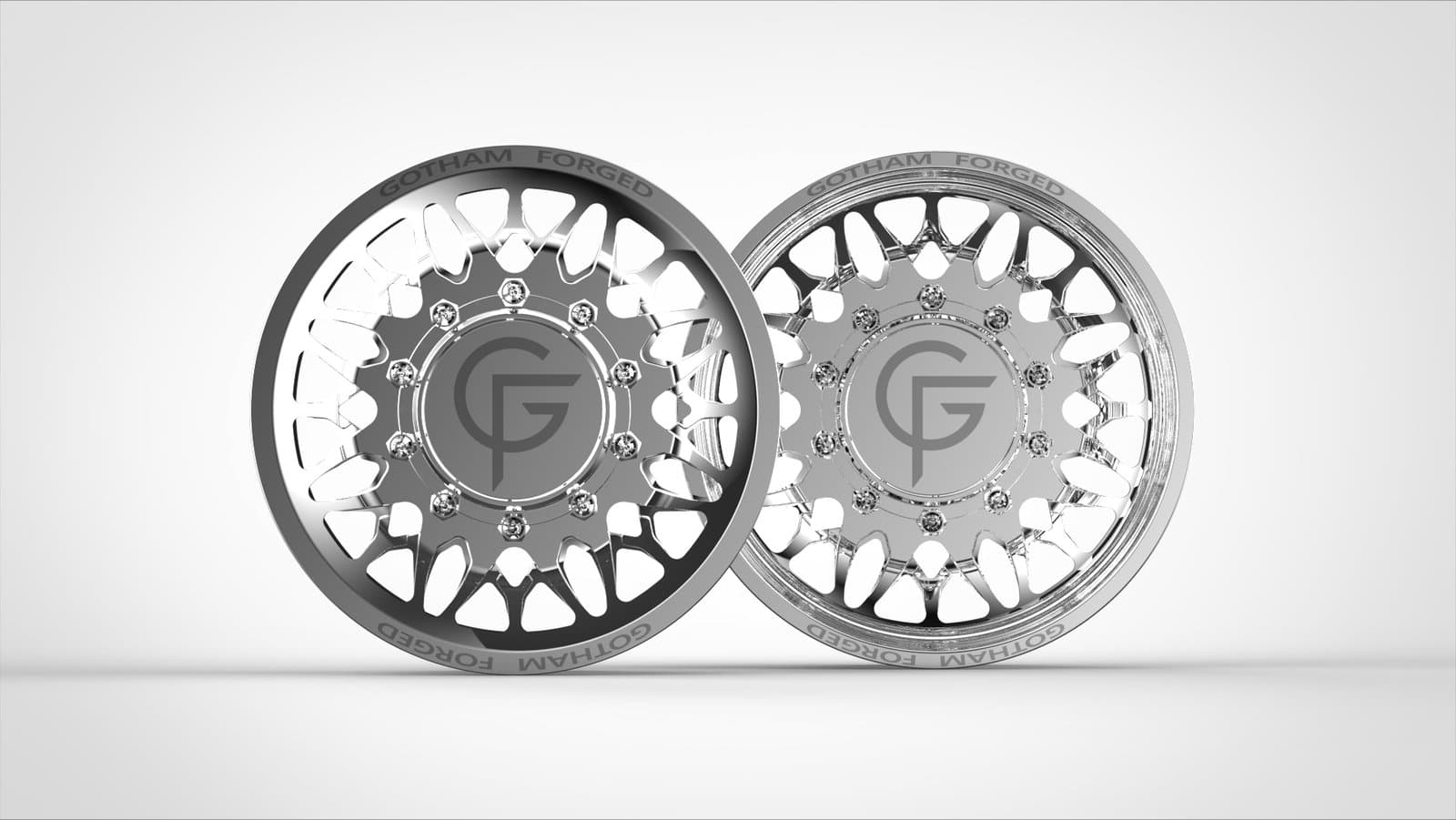
Two Ways to Make a Wheel
Casting pours molten aluminum into a mold and lets it cool. It's fast, it's cheap, and it works for most applications. The aluminum's grain structure is random — wherever the molecules happened to land as the metal solidified.
Forging starts with a solid billet of aluminum and subjects it to extreme pressure — 8,000+ tons in our case. That pressure aligns the grain structure of the metal, creating a molecular pattern that resists fatigue, absorbs impact, and maintains structural integrity under repeated loading.
The difference isn't visible. You can't see grain structure. But you can feel it when a cast wheel cracks on a frost heave and a forged wheel doesn't.
Why Grain Structure Matters
Aluminum is a crystalline metal — it's made up of tiny grains arranged in patterns. In a cast wheel, those grains are randomly oriented with microscopic voids (porosity) trapped between them. These voids are stress concentrators — points where cracks initiate under cyclic loading.
In a forged wheel, the extreme pressure eliminates porosity and aligns the grain structure in the direction of applied loads. The result is a denser, stronger, more fatigue-resistant material — from the same 6061-T6 aluminum alloy.
Same metal. Different process. Completely different performance under load.
What Alberta Does to a Cast Wheel
Alberta's oilfield doesn't care about your wheels. Lease roads are unpaved, unmaintained, and frozen solid from October to April. Spring breakup turns them into mud trenches with frost heaves that can bend a rim. Summer brings washboard gravel that vibrates every component on the truck for hours at a time.
A cast dually wheel running lease roads is living on borrowed time. The random grain structure and trapped porosity create weak points that initiate cracks under cyclic loading. You won't see it happening — the crack starts microscopic, propagates through the casting over thousands of load cycles, and reveals itself as a catastrophic failure when the spoke separates from the barrel.
A forged wheel running the same roads absorbs the same impacts, but the aligned grain structure distributes the stress instead of concentrating it. The energy goes into the material and dissipates, rather than finding a void and starting a crack.
The Numbers
Forged 6061-T6 aluminum typically shows:
- 26% higher tensile strength than cast equivalents
- Up to 3x better fatigue life under cyclic loading
- Zero porosity — no internal voids to initiate cracks
- Better impact resistance — the aligned grain structure absorbs energy instead of cracking
For a dually wheel carrying 5,000+ lbs per corner on rough terrain, those numbers are the difference between a wheel that works and a wheel that works until it doesn't.
The Cost Argument
Cast dually wheels are cheaper — significantly. A set of cast dualies might run $2,000-$4,000. A forged set starts at $12,000. The cost difference is real.
But the cost argument assumes the wheels are consumables — use them and replace them. If your truck is your income — if you're running it to a wellsite every day, if your livelihood depends on that truck being on the road — the cost of a wheel failure isn't the cost of a new wheel. It's the cost of the tow, the downtime, the missed jobs, and the potential for a wheel-off event at highway speed.
Forged doesn't cost more. Cast costs less. There's a difference.
When Cast Is Fine
If your dually is a pavement queen — daily driver, occasional towing, mall parking lots — cast wheels are adequate. The loads are lower, the roads are smoother, the duty cycle is lighter. Cast works.
If your dually works for a living in Alberta, cast is a gamble. Forged is engineering.
What We Build
Every wheel in the Gotham Forged collection is monoblock forged from 6061-T6 aerospace-grade aluminum. Not two-piece welded. Not cast with a forged center. Single-piece forged — the entire wheel, from spoke tip to barrel lip, machined from one solid billet.
We build for the trucks that run the patch, haul the loads, and operate in conditions that would destroy a lesser wheel. That's not marketing — that's material science.